

How Far Can Our Civilization Go?
Introducing the Type II newsletter

Wake up at 5 am. Cold shower. Gym. The abundance of personal development resources made us masters of setting ambitious goals for ourselves.
Yet, when it comes to charting a course for a nation, or even our entire civilization, we seem unable to find common ground.
This isn't surprising. In a world where grand narratives have faded away, we've lost faith in the collective ideals that once united us. Religion, once a guiding force, was shut down by the Enlightenment thinkers. The fleeting rise and fall of ideologies like communism left us disillusioned. Even the concept of progress has failed to deliver on its promise of perpetual happiness.
Now, we seem unable to follow a new direction.
Perhaps we need to look at our insatiable desire for more—our evolutionary drive to push the boundaries of human achievement. It's no coincidence that nature gifted us with expansive frontal lobes for executive and analytical prowess, rather than an innate ability to be content.
Economist Kenneth Boulding once said, "Anyone who believes that growth can be infinite in a finite world is either a fool or an economist." To this, I'd add "or a technologist."
Infinite growth is a must. A shrinking economy becomes a negative-sum game, where one's gain is another's loss. No one wants to go back to the Middle ages.
So, if degrowth — interestingly, the English language lacks a word for this— isn't an option, how can we balance the equation?
We must look beyond our finite planet. The universe is vast, and our growth potential is limited only by our desire to explore it.
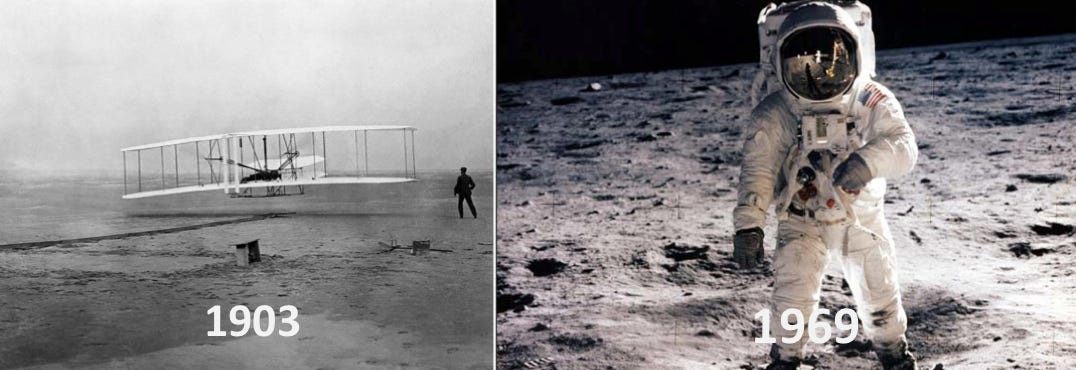
This might be the destiny of our civilization. Soviet astronomer Nikolai Kardashev devised a scale to measure a civilization's technological advancement:
Type I: Harnesses the full energy potential of its home planet.
Type II: capture the entire radiation output of its parent star.
Type III: Has access to energy on the scale of its galaxy, comparable to the luminosity of the entire Milky Way.
Currently, humanity has yet to reach Type I status. We are roughly at 75%. We may achieve Type I within 100-200 years, Type II in a few thousand, and Type III in 100,000 to a million years.
Every day I read on the news that our home is burning, that rapid climate change is destabilizing our world and we may soon hit tipping points that will lead to the collapse of ecosystems and our civilization. Young people feel particularly anxious and depressed. Instead of looking ahead to a lifetime of opportunity they wonder if they will even have a future.
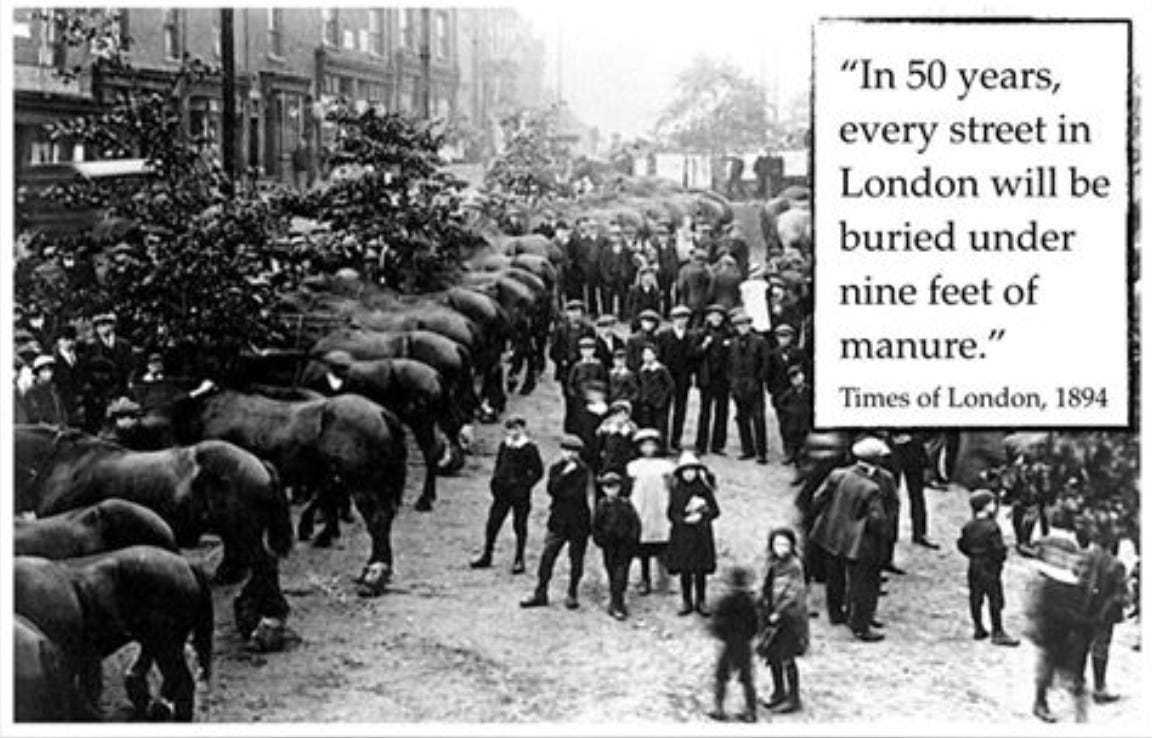
This is nothing new. “In 50 years, every street in London will be buried under nine feet of manure,” wrote The Times in 1894. In the 19th century, cities like London relied on horses for transportation, causing concerns due to excessive manure production. The crisis seemed unsolvable until innovators like Henry Ford introduced affordable motor cars. By 1912, horses were no longer the primary transport in urban areas.
I'm starting this newsletter to envision a journey towards Type II status. What key technologies will shape our future? Who are the entrepreneurs working to make it a reality? Together, let's explore the quest to advance our civilization to unparalleled heights. Doomerism is the only trump card left for the people that don't want change, we are not going to let them win.
Welcome to the Type II newsletter.